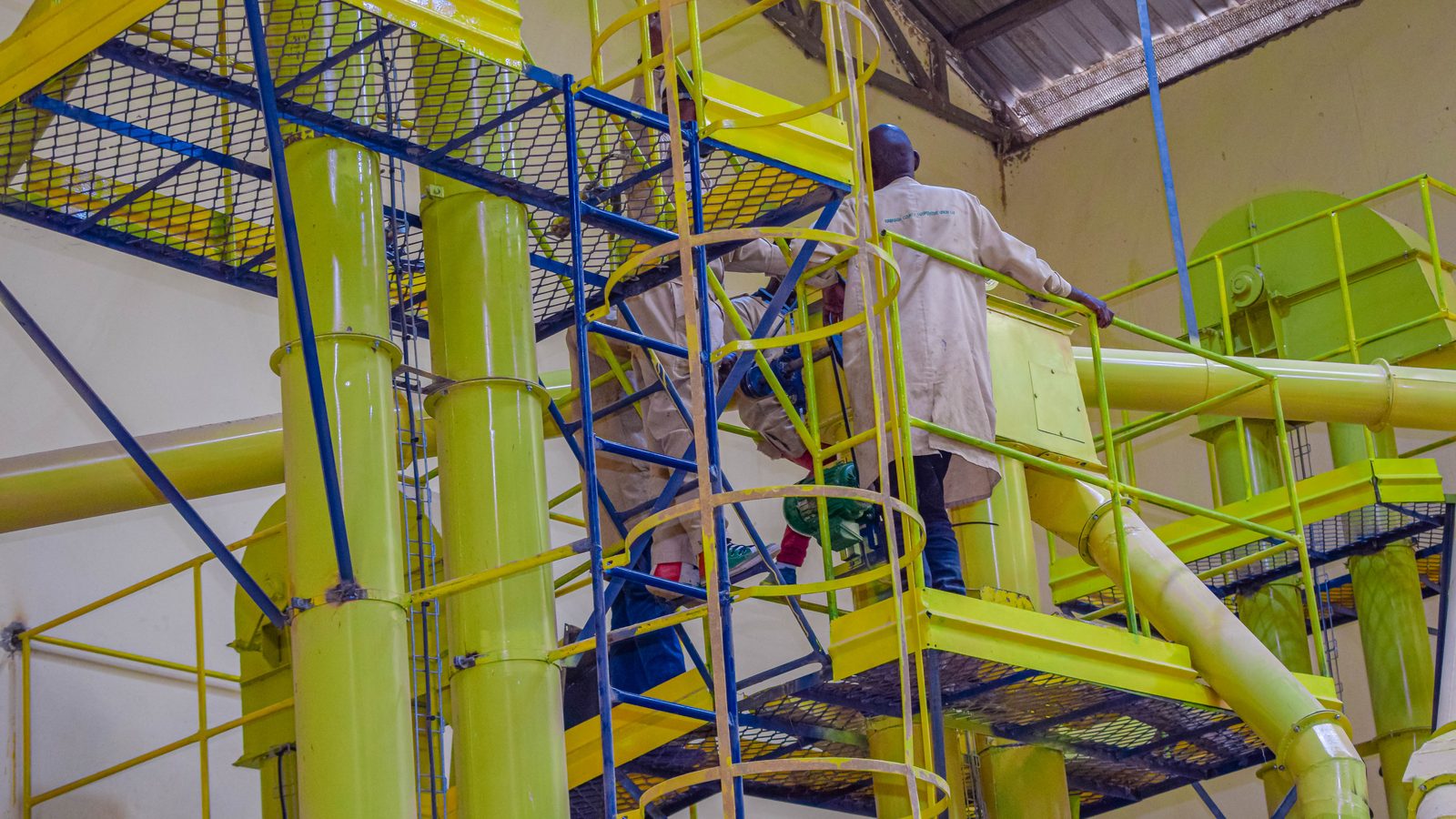
For decades, Kenya’s smallholder coffee farmers faced a recurring economic bottleneck: after dedicating months to meticulous agronomy and wet processing, their dry parchment had to be milled by commercial third-party millers in distant towns, introducing high fees, opaque grading losses, and delayed payments.
Kirinyaga County Co-operative Union Ltd changed that dynamic forever by establishing a modern, farmer-owned dry mill in Kerugoya, dedicated exclusively to serving member cooperatives.
State-of-the-Art Milling Technology
The KCCU mill combines high-capacity pre-cleaners, precision hullers, gravity separator tables, and optical bichromatic color sorters. Key processing steps include:
- Destoning & Pre-Cleaning: Protecting beans and ensuring zero extraneous debris enters the hulling line.
- Friction Hulling: Gently stripping dry parchment husk without generating excessive heat that could degrade delicate aromatic oils.
- Screen Size Grading: Sorting green coffee into international market classifications: Grade AA (screens 17/18), Grade AB (screens 15/16), Grade PB (round peaberry mutations), and Grade C.
- High-Speed Color Sorting: Optical lasers inspect every individual bean, ejecting discolored, insect-damaged, or defective beans with millisecond air-blasts.
Direct Economic Impact for 120,000 Families
Because the Union operates as a non-profit cooperative umbrella, milling savings and byproduct revenues (such as coffee husks used for clean briquette fuel) are returned directly to the 14 primary societies.
“When farmers own the mill and the brokerage, they hold the power of their product in their own hands. Transparency is our greatest asset.”
Today, KCCU’s dry mill processes hundreds of metric tonnes each season, providing certified warehouse storage, prompt moisture audits, and seamless transfer to Nairobi auction and direct-export staging.