As climate change alters weather patterns across the East African rift, sustainable agricultural stewardship has ceased to be an option—it is a generational imperative. Across Kirinyaga, KCCU’s 120,000 smallholders are championing regenerative agronomy models that protect Mount Kenya’s sensitive watershed while enhancing coffee tree vitality.
Through partnerships with Fairtrade (FLO), Rainforest Alliance, and C.A.F.E. Practices, member societies have trained thousands of farmers in canopy management, organic mulching, and natural soil regeneration.
The Power of Indigenous Shade Canopies
Unlike monoculture full-sun coffee farms, Kirinyaga smallholdings average between 200 and 300 coffee trees intercropped with native shade species such as Cordia africana (Muringa), Albizia, and commercial fruit canopies like Macadamia and Avocado.
The ecological advantages of this agroforestry model are profound:
- Microclimate Moderation: Canopy foliage buffers daytime temperature spikes and protects cherries from torrential hail, ensuring a steady, slow ripening cycle.
- Soil Moisture Retention: Fallen leaf litter creates a rich organic humus layer, reducing soil evaporation during dry spells and eliminating the need for synthetic weedkillers.
- Erosion Prevention: Mountain contour trenches planted with vetiver and desmodium grass prevent topsoil runoff during seasonal tropical downpours.
Recycling Mill Water & Organic Compost
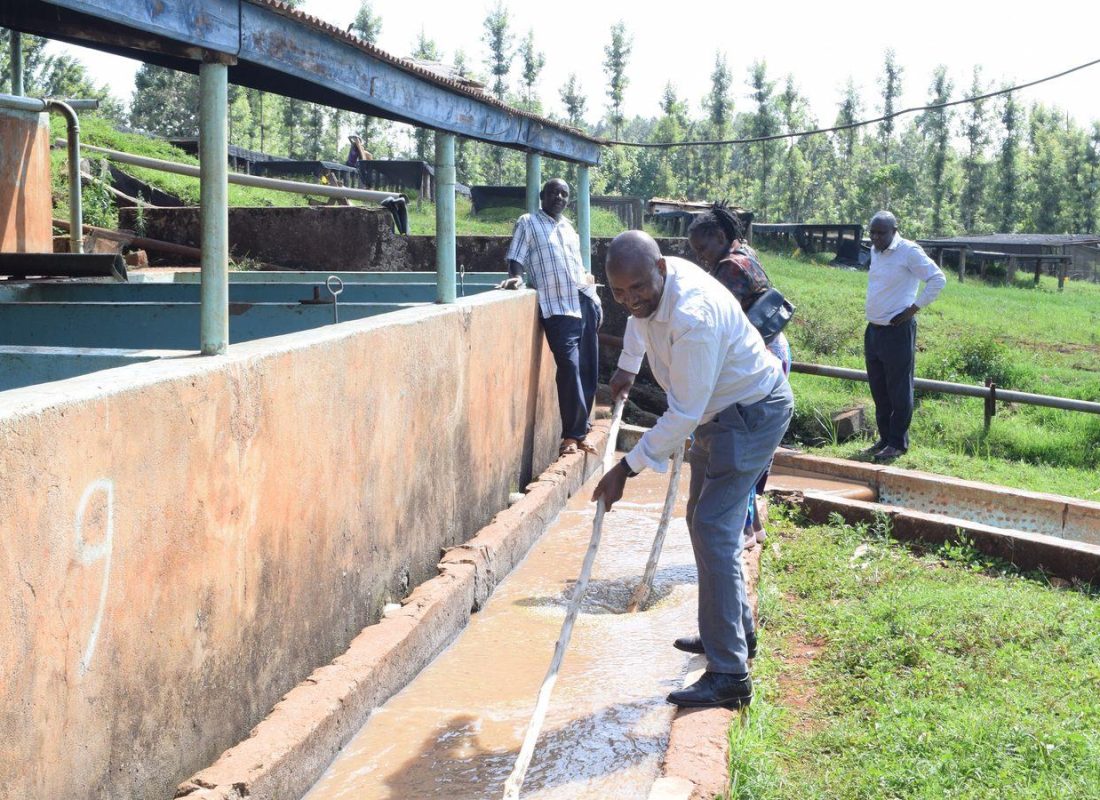
At the factory level, our wet mills have implemented eco-pulpers and biological wastewater treatment ponds. Pulp discarded during wet milling is collected, composted with farm manure, and redistributed to members as nutrient-dense organic fertilizer.
“A healthy Mount Kenya watershed means healthy rivers, resilient trees, and prosperous farming families for generations to come.”
By blending ancestral stewardship with modern certification standards, Kirinyaga smallholders prove that top-tier coffee quality and ecological conservation go hand in hand.